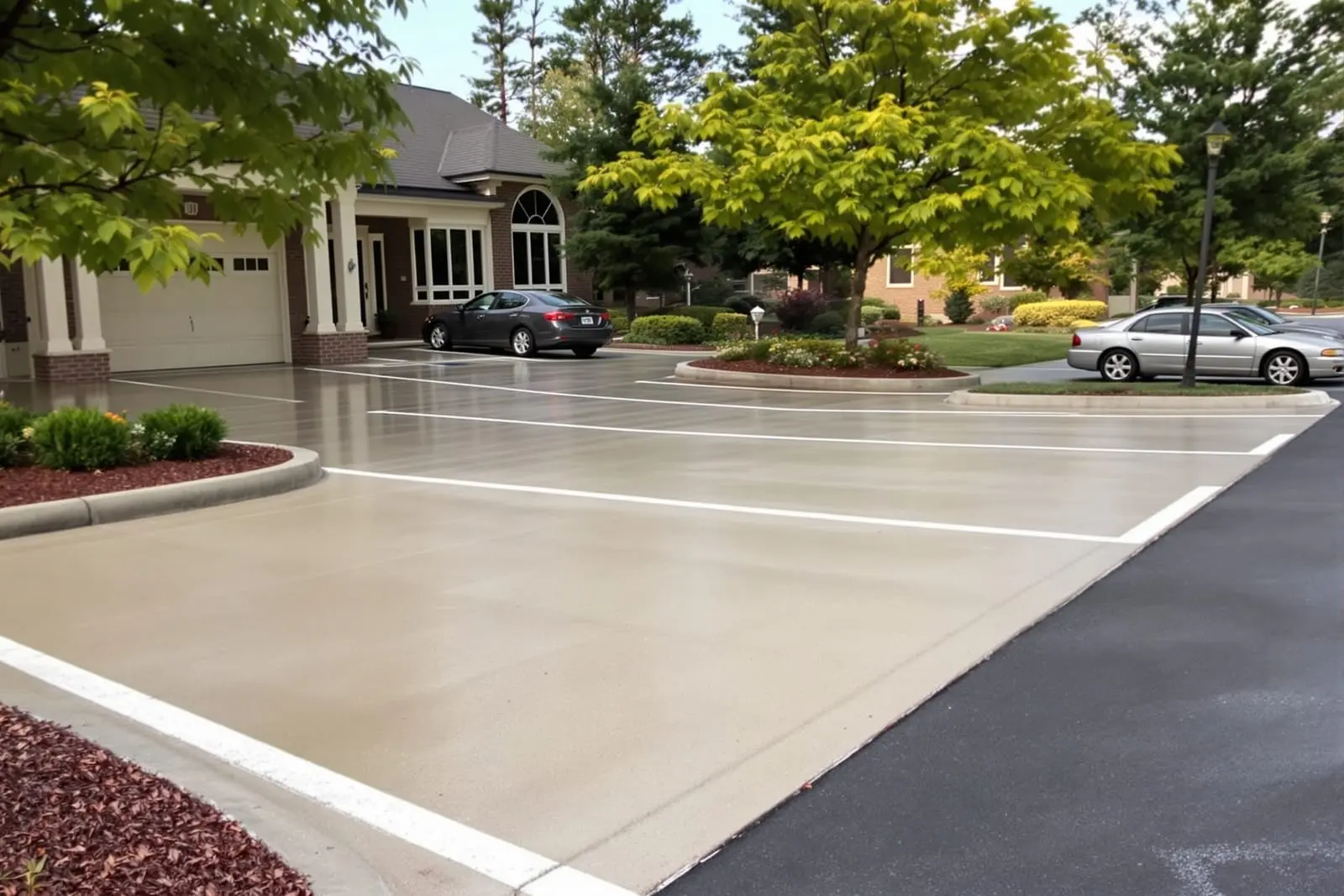
Handle heavy traffic with a concrete parking lot in Kissimmee, FL. We design and pour lots with proper thickness, reinforcement, and drainage. From small business parking to larger facilities, our team lays out stalls, drives, and ADA spaces to keep traffic flowing safely.
Primetime Concrete Kissimmee provides professional concrete parking lot throughout Kissimmee, FL and the surrounding area. Our licensed, insured crew delivers safe, clean, on-time work with a free estimate before anything begins. Call (321) 248-5449 or request your free quote.
Concrete Parking Lots Built for Kissimmee Traffic and Weather
A concrete parking lot in Kissimmee is not just a flat gray surface. It is a structure that has to carry heavy vehicles every day, drain fast during summer storms, and hold up under high heat and UV exposure. Primetime Concrete Kissimmee designs and builds parking lots with those local conditions in mind so you are not paying for patch jobs every rainy season.
We start every project with questions about use, not just square footage. How many vehicles at peak? Any delivery trucks or garbage trucks using the lot? Do you have frequent turn movements near drive-thru lanes or loading areas? Those answers determine the slab thickness, base depth, and reinforcement layout so the pavement does not rut, crack, or pump water through the joints.
Concrete is a higher up-front investment than basic asphalt, but for many commercial properties in Kissimmee it pays back through lower long-term maintenance and better appearance. A properly designed concrete parking lot typically needs fewer resurfacing cycles, and the bright surface improves nighttime visibility, which can reduce the number of light poles needed and make the property feel safer for customers and staff.
Step-by-Step: How We Build a Concrete Parking Lot
When Primetime Concrete Kissimmee installs a concrete parking lot, the visible slab is only part of the work. Long life starts with the ground under the concrete.
1) Site evaluation and layout. We confirm property lines, existing drainage patterns, and utility locations, and coordinate with any surveyor or engineer if required. We also review traffic flow so striping, handicap access, and fire lanes will be laid out logically from the start.
2) Excavation and subgrade preparation. We remove unsuitable material, existing pavement, soft organics, or debris. In Kissimmee, sandy soils can be both a benefit and a risk. They drain well but can shift if not compacted correctly. We moisture-condition the subgrade if needed and compact it in thin lifts to achieve uniform support.
3) Base installation. A stable aggregate base is key. We typically install 4 to 8 inches of compacted crushed stone or limerock, depending on traffic loads. The base is laser graded so water will move to drains or perimeter edges instead of pooling in the middle of the lot.
4) Forms, reinforcement, and joints. We set forms to the final elevation and cross slopes. For light duty parking we may use fiber-reinforced concrete only. For areas with delivery trucks, dumpster pads, or drive aisles, we add rebar or welded wire reinforcement. We also plan contraction joint spacing before the pour so the slab will crack in controlled lines instead of random zigzags.
5) Concrete placement and finishing. We typically use a 4,000 psi mix designed for Central Florida conditions, with air entrainment where freeze protection is needed for occasional cold snaps. The mix is placed using chutes or a pump, consolidated, screeded level, and then given a broom finish for skid resistance. We avoid overworking the surface, which can weaken the top layer.
6) Curing and joint sealing. Proper curing is essential in our heat. We apply curing compound or, in some cases, use curing blankets or wet curing methods to slow moisture loss. Once the concrete reaches the right strength, we saw joints at the planned spacing and seal key joints to keep water and debris out.
7) Striping and signage. After cure time, we paint parking lines, ADA spaces, directional arrows, and fire lanes with traffic-grade paint rated for concrete, then install wheel stops and signage as needed.
Design Options: Thickness, Layout, and Surface Choices
Concrete parking lots are not one-size-fits-all. Primetime Concrete Kissimmee adjusts design details to fit how your property is used and what you expect the lot to look like.
Slab thickness. For small office or retail customer parking, we usually recommend 4 to 5 inches of concrete. For restaurant lots with frequent deliveries, multi-family communities with larger vehicles, or areas where garbage trucks turn, thickness often goes to 6 inches or more, sometimes with thicker pads at dumpster and loading zones so those high-stress spots hold up.
Reinforcement strategies. Not every area needs the same reinforcement. We may keep standard parking stalls as fiber-only, then use rebar grids in drive aisles or truck routes. This targeted approach controls cost while protecting the areas that take the most abuse.
Surface texture and color. The most common finish is a light broom texture, which gives slip resistance in wet weather. If glare is a concern or if you want a more upscale look, we can use a light integral tint or a pigmented sealer. In some entry zones and walkways, owners choose decorative borders or scored patterns while keeping most of the lot standard gray to control budget.
Drainage and slopes. Kissimmee gets intense afternoon downpours, so we plan slopes and drain locations carefully. Typical cross slopes are in the 1.5 to 2 percent range, enough to move water off the surface without making it uncomfortable for pedestrians or ADA routes. We coordinate with your engineer or create practical drainage layouts when no prior plan exists.
Integration with existing features. For many projects, the parking lot has to tie into existing curbs, sidewalks, and drive entrances. We sawcut clean transition lines, adjust elevations to reduce trip hazards, and match or upgrade existing concrete finishes so the entire frontage looks intentional instead of pieced together.
What Affects the Cost of a Concrete Parking Lot in Kissimmee
Customers often ask for a cost per square foot, but a realistic budget for a concrete parking lot depends on conditions and use. Primetime Concrete Kissimmee explains each cost driver before work begins so there are no surprises.
Existing conditions. Removing old asphalt, unstable fill, or tree roots can add labor and disposal fees. Lots that require extensive grading or removal of unsuitable soil will cost more than a simple re-pour over stable ground.
Thickness and reinforcement. A 4 inch light duty lot is cheaper than a 6 inch truck-capable lot with rebar. However, using too light a design in high traffic areas ends up more expensive in repairs. We show you where you can safely save and where you should not cut corners.
Drainage structures. Catch basins, trench drains, tie-ins to existing storm systems, and underdrains for problem areas add cost but are often mandatory in Kissimmee to avoid standing water, liability issues, and code violations.
Access and phasing. Working in active businesses, such as convenience stores or medical offices, sometimes requires night work or phasing the lot into sections so you always have open parking. This can extend the schedule and slightly increase cost due to extra mobilizations and traffic control.
Finishes and markings. Simple layout and standard paint striping cost less than multi-color striping, custom logos, or extensive signage and wheel stops. ADA compliance items like ramps and truncated dome mats must meet code, and we include those in our pricing so they are not surprise add-ons later.
Permits and inspections. In Osceola County and the City of Kissimmee, some parking lot projects trigger permitting, reviews, or inspections, especially when drainage or site layout changes. We can assist with that process or coordinate with your engineer or architect as needed.
Common Problems We Prevent in Kissimmee Parking Lots
Hot weather, heavy rain, and daily traffic create predictable issues in poorly built lots. Primetime Concrete Kissimmee designs and installs to avoid those problems instead of waiting to patch them later.
Premature cracking. All concrete cracks at some point, but uncontrolled, wide cracks come from poor joint spacing, weak subgrade, or rushed curing. We plan joint patterns, compact the base, and manage curing times around local temperatures so cracks follow joints and stay tight.
Ponding water. Depressions that hold water become algae-covered slip hazards and accelerate surface wear. We use laser-guided grading on both base and concrete when practical and verify slopes toward drains or edges. In existing lots that already have low spots, we can evaluate whether partial replacement, slab jacking, or adding inlets will solve the issue.
Surface scaling or dusting. Pouring in the peak of a hot afternoon or overworking bleed water can weaken the top surface. In Kissimmee, we often schedule larger pours for early morning, when temperatures and direct sunlight are lower. We avoid adding water at the surface and use mixes suited to outdoor parking applications.
Edge failures. The edges of concrete that are frequently driven off can break if they are too thin or unsupported. We design enough base extension beyond the slab and use thicker pavement or curbs in turn-out areas to keep edges from crumbling.
Drain line and utility conflicts. Parking lot replacements often cross old irrigation lines, electrical conduits, or abandoned utilities. We look for visible signs and, when needed, work with locators. If we hit an undocumented line, we stabilize, repair, or reroute it with the least disruption possible and document the change for you.
Scheduling, Timeline, and What to Expect During the Project
Timing matters for parking lot work in Central Florida. Primetime Concrete Kissimmee typically recommends scheduling larger pours outside the peak of hurricane season when possible, and planning around your busiest business days so access interruptions are minimized.
Planning and approvals. Before work starts, we review scope, phasing, and any required permits with you. For operating businesses, we map out which entrances stay open at each stage and where temporary signage will direct customers.
Typical timeline. A straightforward small to mid-size commercial lot might follow this pattern:
Day 1 to 3: Demolition of existing pavement, excavation, base installation, and rough grading.
Day 4 to 5: Fine grading, forms, reinforcement installation, and first concrete pours.
Day 6 to 10: Additional pours (if phased), curing, joint sawing, and cleanup.
Day 10 to 14: Striping, signage, and final punch list.
These ranges vary with weather and project complexity, but we maintain communication so you know who will be on site and when.
Cure times and traffic. Light foot traffic is usually allowed within 24 hours, but vehicle traffic should stay off new concrete for at least 5 to 7 days, sometimes longer in heavily loaded areas. We set realistic re-open dates in the contract and can phase the work so sections of the lot come back into service as soon as they are ready.
Site safety and cleanliness. During construction, we secure work zones with cones, tape, or barricades, and maintain safe pedestrian paths to your doors. We keep debris contained, clean adjacent streets at the end of each day if tracked material is present, and remove all forms, spoils, and excess materials so the finished lot is ready for customers without further cleanup on your part.
If you are considering a new concrete parking lot or replacement of an aging one in Kissimmee, Primetime Concrete Kissimmee can walk your site, explain your options in plain terms, and provide a detailed proposal that ties design choices directly to cost and long-term performance.
“
Professional parking lot concrete, done right the first time, quality materials, honest pricing, and results that last.